
Checking Criminal History in Coke County
No one database holds every Coke County criminal record. The combined County/District Clerk keeps filed felony and county misdemeanor cases. The sheriff holds reports and custody records. Robert Lee Municipal Court handles its own fine-only city matters, while Bronte record questions begin at City Hall. Texas DPS compiles reported conviction and deferred-adjudication data, but that public product is not a copy of the local case file.
Start a Coke County search with a full name, spelling variants, an approximate date, and the likely court or arresting agency. A date of birth helps separate similar names, but access rules may limit what a public record displays. Follow the record from its local source to the state system:
- Open the Coke County clerk’s Judicial Case Search and choose Coke County in iDocket. Check both district and county case levels.
- Call the clerk at 325-453-2631 when a case is archived, a document is missing, or a certified copy is needed.
- For an arrest, incident, or booking question, call the sheriff at 325-453-2717 and submit the signed public information form when a copy is required.
- Check Robert Lee Municipal Court or Bronte City Hall when the event was a city citation or city-created report.
- Compare the local result with DPS. Use a fingerprint-based personal review when an exact self-match matters.
For deeper detail on charges, filings, and judgments, use the Coke County criminal court case search. A calendar entry shows a setting, not the whole file.
Coke County Criminal Records Counters
Coke County has a rare, compact records layout in Robert Lee. The County/District Clerk and the sheriff both list 13 E. 7th Street. Robert Lee City Hall and its municipal court are across the street at 6 E. 7th Street. That short walk crosses a real jurisdiction line. Felony and Class A or B misdemeanor files belong with the county clerk. Fine-only city citations belong at the municipal counter. Sheriff reports and custody files remain separate from both.
The official Coke County home page shows the courthouse contact panel and published hours. Its current layout appears in this county-source image.
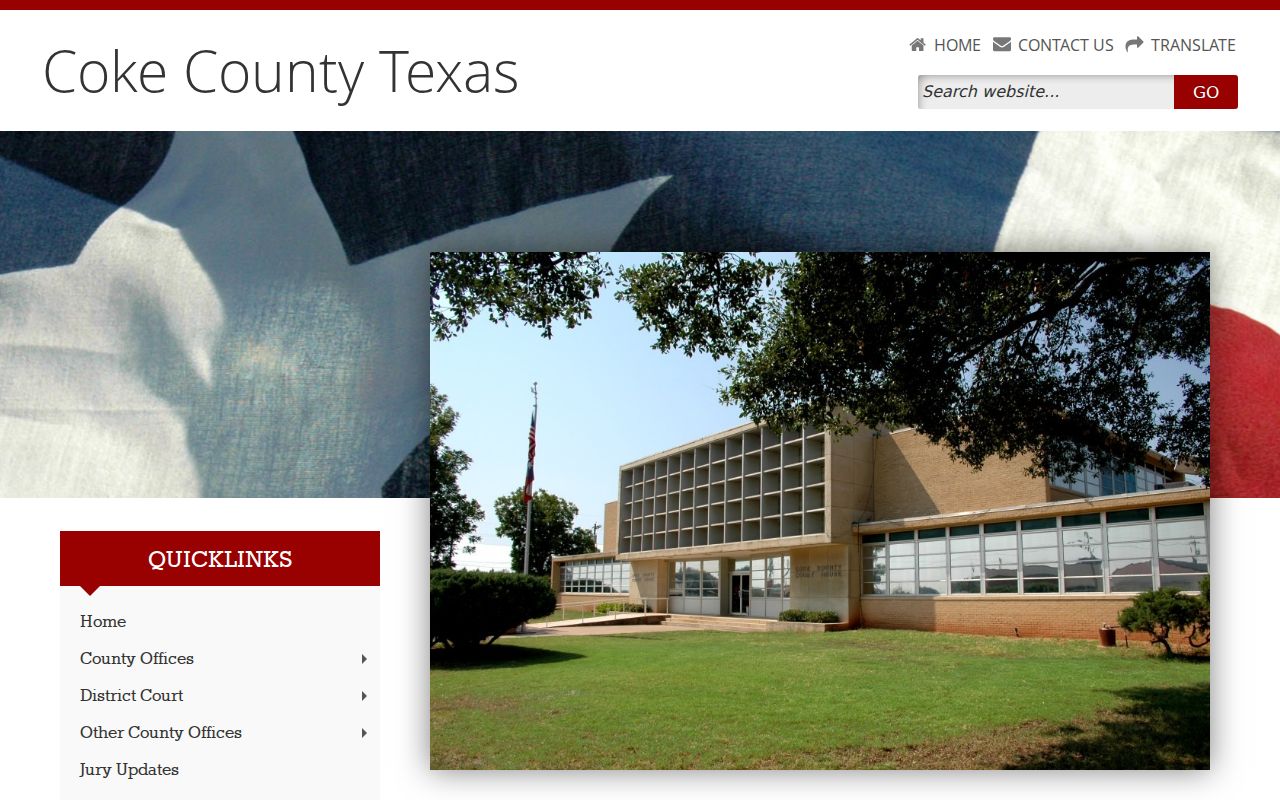
The image reflects the central role of the courthouse, but visitors should still call the right custodian before travel. Ordinary courthouse hours are Monday through Thursday from 8:00 a.m. to 5:00 p.m. and Friday from 8:00 a.m. to 1:00 p.m., with a general noon lunch period. Clerk duties during elections can alter those hours.
County/District Clerk
13 E. 7th St.
Robert Lee, TX 76945
325-453-2631
District and county case files
Coke County Sheriff
13 E. 7th St.
Robert Lee, TX 76945
325-453-2717
Reports and custody records
Note: The Coke County clerk keeps no cash drawer, so visitors who pay cash in person must bring the exact amount.
Texas Official Background Checks
The Texas Department of Public Safety Crime Records Service maintains the Computerized Criminal History system used for the statewide layer of a Coke County search. Its public name search discloses reported convictions and deferred adjudications that state law makes public. Online, mail, and fingerprint costs differ by request method.
For review of your own Texas record, fingerprints give the best identity match. Use form CR-63 and schedule FAST capture through IdentoGO. DPS lists a $15 record check and a $10 FAST capture fee for this process. No permanent IdentoGO site was verified in Coke County, so Coke County residents should check the live scheduler for mobile service or the nearest San Angelo appointment.
| Official check | Amount found | Best use |
|---|---|---|
| DPS online name search | $1 credit per search, plus card charges | Public Texas conviction and deferred data |
| DPS CR-42 mail request | $10 | Public name search by mail |
| DPS fingerprint review | $15 plus $10 FAST capture | Identity-matched review of your own record |
Coke County DPS Record Search
The DPS Criminal History Name Search uses an account and prepaid credits. Its official entry screen is shown here.
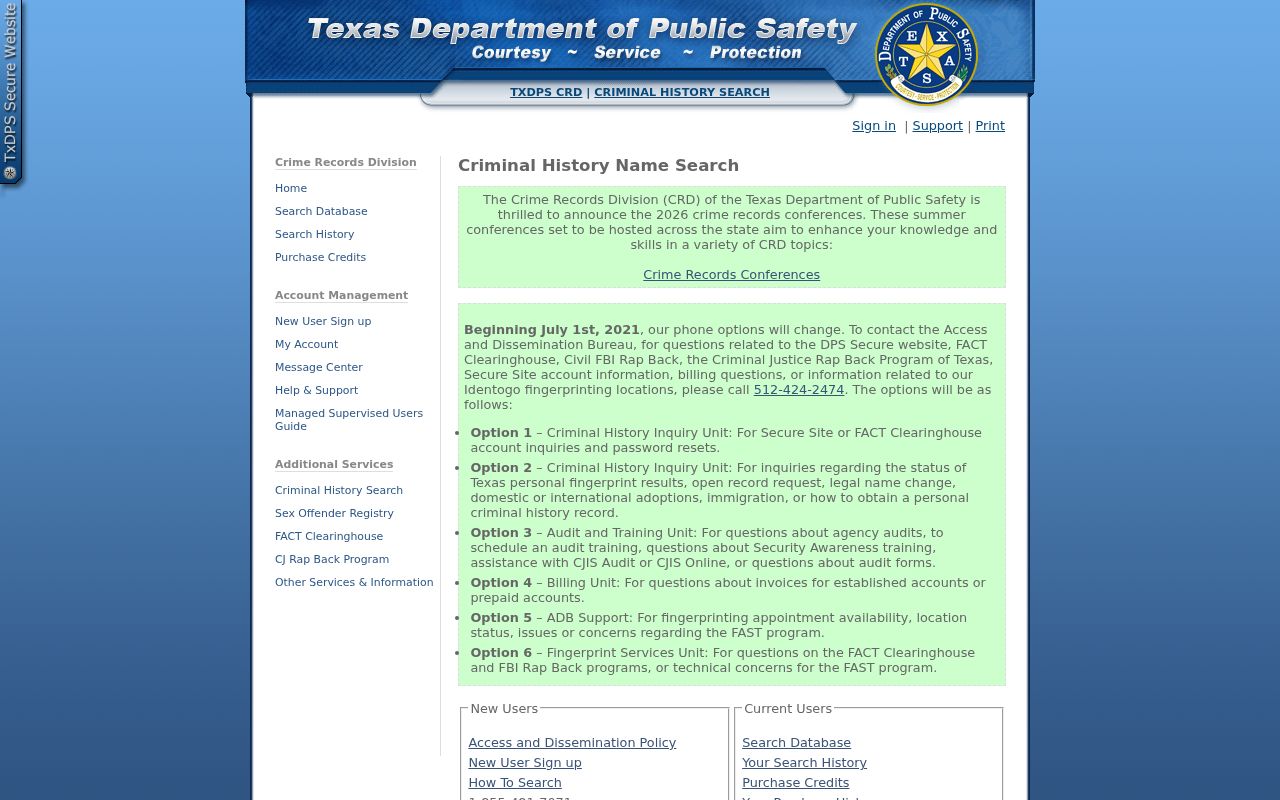
This state search should follow, not replace, a Coke County clerk check. Coke County iDocket may show a pending charge or dismissal that the narrower public DPS product does not display.
DPS search help describes names, birth details, and exact or similar-sounding match behavior. A full birth date can narrow candidates. Required markings can vary by session. Save results promptly because the portal limits how long result and message screens remain available.
| Search field | Format | Use |
|---|---|---|
| Last name | Text | Core name match |
| First and middle name | Text | Narrows common surnames |
| Date of birth | Date details | Helps distinguish candidates |
| Match behavior | Exact or broader options | Can find spelling or sound variants |
The official DPS search instructions explain credits and matching. The image below captures that public guidance.
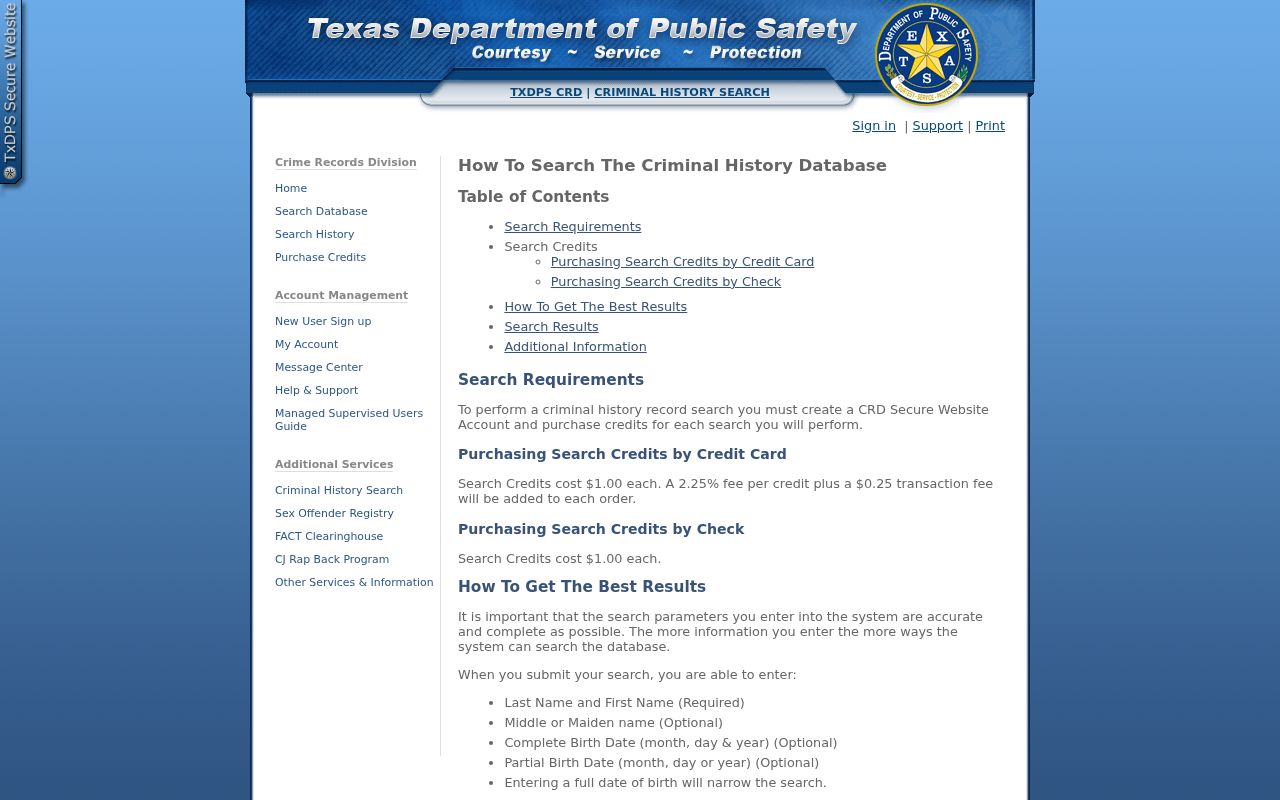
“No matching records” is still a paid result. It does not rule out an alias, a reporting gap, restricted data, or a case that exists only at the Coke County clerk.
Criminal Record Types
A Coke County criminal record changes as an event moves through the justice system. The first report may come from the sheriff, a city officer, constable, highway patrol trooper, or another state officer. The sheriff then creates a custody file if the person is booked. The prosecutor decides what to file, and the clerk preserves the court case. DPS later compiles qualifying fingerprint-linked arrests and reported outcomes.
- Incident or arrest report: the originating agency’s account of the event, legal basis, people, place, and property.
- Booking record: custody intake, received charges, bond, identifiers, property, and release information.
- Court file: complaint, information or indictment, settings, motions, plea, judgment, sentence, and later case events.
- Warrant record: authority issued by a court, with execution and custody details held by law enforcement.
- State history: the DPS compilation of fingerprint-linked cycles and reported prosecutor or court outcomes.
- Custody or registry entry: TDCJ prison status, parole data, or a DPS sex-offender registry profile when applicable.
Note: A Coke County arrest is not proof of guilt, and the charge filed later may differ from the booking label.
Coke County Sheriff Record Requests
Coke County has no advertised online request portal or separately named sheriff records division. The official route is a signed Public Information Request Form sent to Attn: Open Records at 13 E. 7th Street, Robert Lee, TX 76945, or emailed to sheriff@co.coke.tx.us. The form offers six record choices: offense, incident, accident, arrest, body-camera, and dash-camera records.
Describe an existing document. Include the incident number when known, plus date, approximate time, location, involved subject, and the exact record type. Body-camera requests need date and approximate time, a specific location, and at least one known subject under Texas law. The sheriff may redact protected data. Selecting the form’s non-confidential-only option can allow release of usable portions without waiting for a ruling on withheld material.
If the Coke County estimate exceeds $100, the form calls for a $50 deposit. It lists exact cash, cashier’s check, or money order. There is no flat Coke County report-copy price in the research. The office says it will release the information, seek more time, or ask for an Attorney General ruling within its stated process.
Note: A phone call can confirm routing, but a written, signed request creates the documented public-information request.
Inside a Coke County Criminal Record
The contents depend on the custodian. A full DPS history can group names, aliases, date of birth, SID or FBI identifiers, fingerprints, arrest cycles, tracking numbers, charges, prosecutor action, court cause, disposition, sentence, custody, and supervision. The public name-search product is narrower. Coke County court records focus on cause number, court, filed charge, docket activity, orders, judgment, and sentence. Sheriff files focus on the event and custody.
| Name and identifiers | Names, aliases, birth details, and agency numbers used to distinguish records. |
|---|---|
| Arrest and booking | Agency, time, received charge, bond, custody, and release data that may exist in sheriff files. |
| Filed charge | Complaint, information, or indictment tied to a court cause. |
| Disposition | The count-level result, such as dismissal, deferred adjudication, acquittal, or conviction. |
| Sentence | Jail or prison term, fine, costs, restitution, or community supervision stated in the judgment. |
| Custody and supervision | Local release, TDCJ location, parole status, or court supervision references when public. |
Common terms can change the meaning of a Coke County record:
- Disposition
- The way a charge or case ended.
- Deferred adjudication
- A process in which a guilt finding is withheld while community supervision is completed.
- No-bill
- A grand jury declined the proposed indictment.
- Capias
- A court order directing an arrest, often tied to a later procedural or judgment stage.
Coke County Custody and Warrant Records
The Coke County sheriff site publishes no jail roster, booking blotter, active-warrant search, or most-wanted list. For current custody, use the VINELink referral on the sheriff page, then call 325-453-2717. If the person has been released, transferred, or housed under contract, a public roster search may not answer the question. Request an existing arrest or booking-related record from the sheriff and check the clerk for charges.
Warrants require a similar chain. Call the sheriff for safe surrender or custody instructions. Ask the combined clerk about district or county cause warrants, Robert Lee Municipal Court about city capias matters, and the Coke County Justice of the Peace about justice-court process. Texas Crime Information Center data is for criminal-justice use, not a public statewide warrant lookup. Confirm the issuing court, cause number, charge, bond terms, and current status before acting.
The TDCJ Online Inmate Search is for state prisoners and public release information, not Coke County pretrial custody. County assignments for parole are separate from jail records.
Note: The Coke County arrest lookup explains local channels, but only the issuing court can confirm whether a warrant remains active.
Public Access Laws in Texas
Access depends on who holds the record and why it is restricted. Coke County sheriff records fall under the Texas Public Information Act, while judicial files follow court access rules and local clerk procedure. DPS sells public conviction and deferred-adjudication data under a separate criminal-history statute. A request can yield a redacted copy when victim details, juvenile data, identifiers, an active investigation, or nondisclosed material is protected.
Key Texas laws:
Government Code Chapter 552 grants access to government information while recognizing law-enforcement, identifier, and nondisclosure exceptions.
Government Code §411.135 authorizes public DPS dissemination of conviction and deferred-adjudication history under agency procedures and fees.
Code of Criminal Procedure Chapter 55A governs expunction eligibility, notice, hearings, and legal effect.
Code of Criminal Procedure Chapter 62 controls sex-offender registration and the public registry.
Write Coke County requests for named records rather than answers to questions. Government offices do not have to create a new document to respond. A public result can also be incomplete because a disposition has not yet been reported.
Coke County Criminal Records Geography
Coke County’s small population and large area explain its centralized records system. Census QuickFacts estimates 3,412 residents as of July 1, 2025, across 911.65 square miles. That is about 3.6 people per square mile. One courthouse in Robert Lee serves as the main county and district records hub, while some state services and parole functions route through San Angelo.
The Census QuickFacts profile for Coke County supplies the population and land-area context shown in this image.
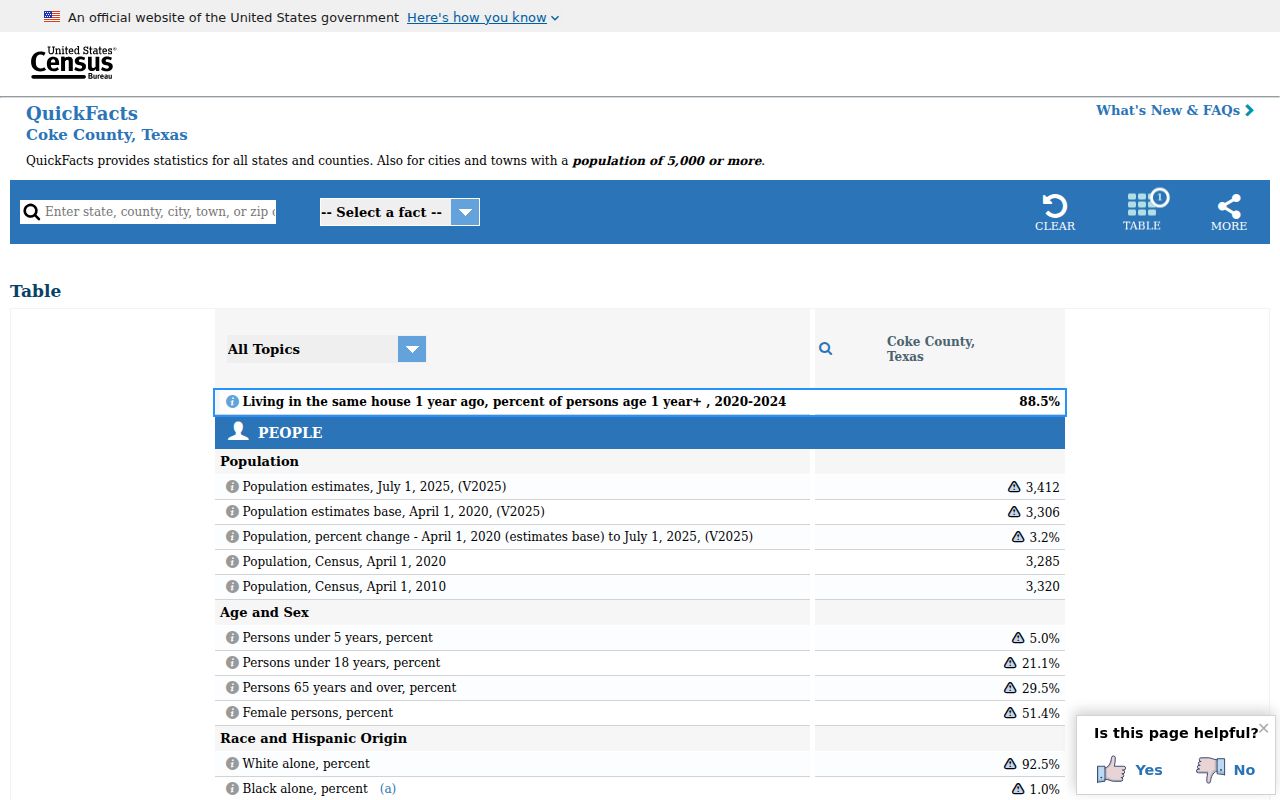
Those facts describe service geography, not crime risk. In a county this small, a modest change in raw incidents can produce a sharp percentage swing. Current official county crime counts were not reliable in the researched sources, so no broad trend claim should be inferred.
The historic 1907 Coke County jail at 601 Chadbourne Street adds context but is not the modern custody desk. It once housed sheriffs downstairs, averaged about four prisoners per month in an early account, and had a second-floor gallows that was never used. Present custody questions belong with the sheriff, not the historic site.
Sealed, Expunged, and Restricted Records
Not every Coke County criminal record is public. Juvenile law-enforcement and court records, expunged cases, nondisclosed history, victim or minor identifiers, active-investigation material, and private identity numbers may be withheld or redacted. Some older fine-only municipal records become confidential under Article 45A.056 after the statutory period. A missing public result may therefore reflect a legal limit rather than a failed search.
Coke County expunction under Texas Code of Criminal Procedure Chapter 55A is the stronger removal remedy for a covered arrest episode. Eligibility depends on the exact arrest, outcome, timing, related charges, and statutory route. A conviction does not become eligible just because time passes. Orders of nondisclosure usually restrict public dissemination but preserve access for criminal-justice agencies and other recipients named by law.
The combined Coke County/District Clerk is the local filing and fee contact. The clerk links an Expunction Agency Email List, which helps identify agencies that may need notice. No flat Coke County total filing fee or local petition template was located. After an order, recheck local displays and use a fingerprint-based DPS review to find covered data that has not yet been removed.
Note: A dismissal is not automatic expunction, and deferred adjudication is not the same as an acquittal.
Coke County Parole and Federal Records
Texas calls probation “community supervision.” The sentencing court’s judgment and Coke County docket are the public starting points, but day-to-day Community Supervision and Corrections Department files are not a general people locator. No current standalone Coke County CSCD page was found. Confirm the reporting office through the combined clerk or the 51st Judicial District.
The official TDCJ parole directory assigns Coke County to the San Angelo District Parole Office in Region V. This image shows the statewide county assignment source.
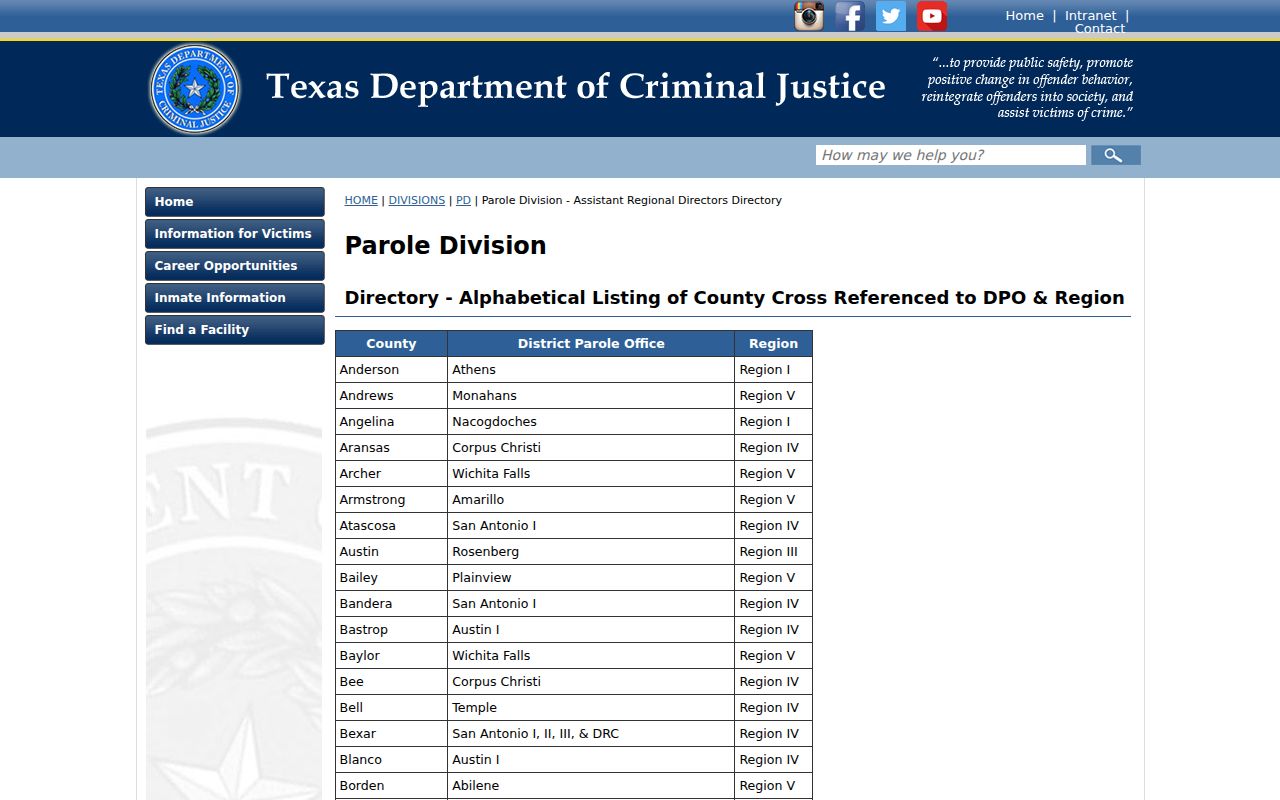
The directory helps verify the Coke County supervision office after a TDCJ status search. It does not disclose an officer’s operational case notes or prove a violation.
Federal cases use a different path. Coke County lies in the Western District of Texas. The official PACER service provides federal dockets and filed documents after account registration. A personal federal record review uses the subject-only FBI Identity History Summary, with electronic requests started through the FBI EDO portal.
PACER does not contain Coke County court files. Federal custody belongs in the Bureau of Prisons locator, while local custody remains a sheriff question.
Coke County Criminal Records by City
Coke County has only two incorporated places: Robert Lee and Bronte. The 2020 Census counted 1,049 residents in Robert Lee and 933 in Bronte. Each city creates or routes some local records, but county criminal cases still move to the combined clerk and iDocket. Each city therefore needs its own starting point.
Robert Lee Criminal Records
Population 1,049 · Municipal citations begin with the city court at City Hall.
Bronte Criminal Records
Population 933 · Start with City Hall to identify the report agency or court.
Robert Lee City Hall sits across East 7th Street from the Coke County courthouse. No public municipal case portal was found, so phone or email the court. Bronte’s official government page also exposes no verified criminal case portal, police app, or arrest log. Ask which agency made the record, then move to the sheriff, clerk, justice court, or DPS as the answer requires.
Choosing a Coke County Record Search
The best search depends on the question. iDocket answers what charge reached court and how the docket changed. The sheriff form seeks an existing incident, arrest, or camera record. VINELink helps with custody status. DPS shows the public statewide history layer, while fingerprint review gives a stronger match for your own record. TDCJ covers state imprisonment, and PACER covers federal court.
| Question | Start here | Then verify with |
|---|---|---|
| Was a criminal case filed? | Coke clerk and iDocket | Clerk copy desk |
| What did the officer report? | Originating agency | Sheriff form if the sheriff holds it |
| Is someone in custody? | VINELink and sheriff phone | TDCJ if sentenced to state prison |
| Is there an active warrant? | Issuing court and sheriff | Cause number and current court status |
| Does my Texas history match me? | DPS fingerprint self-review | Clerk and originating agency |
The official FAST IdentoGO scheduler is the live source for fingerprint appointments. Its service-code entry is shown below.
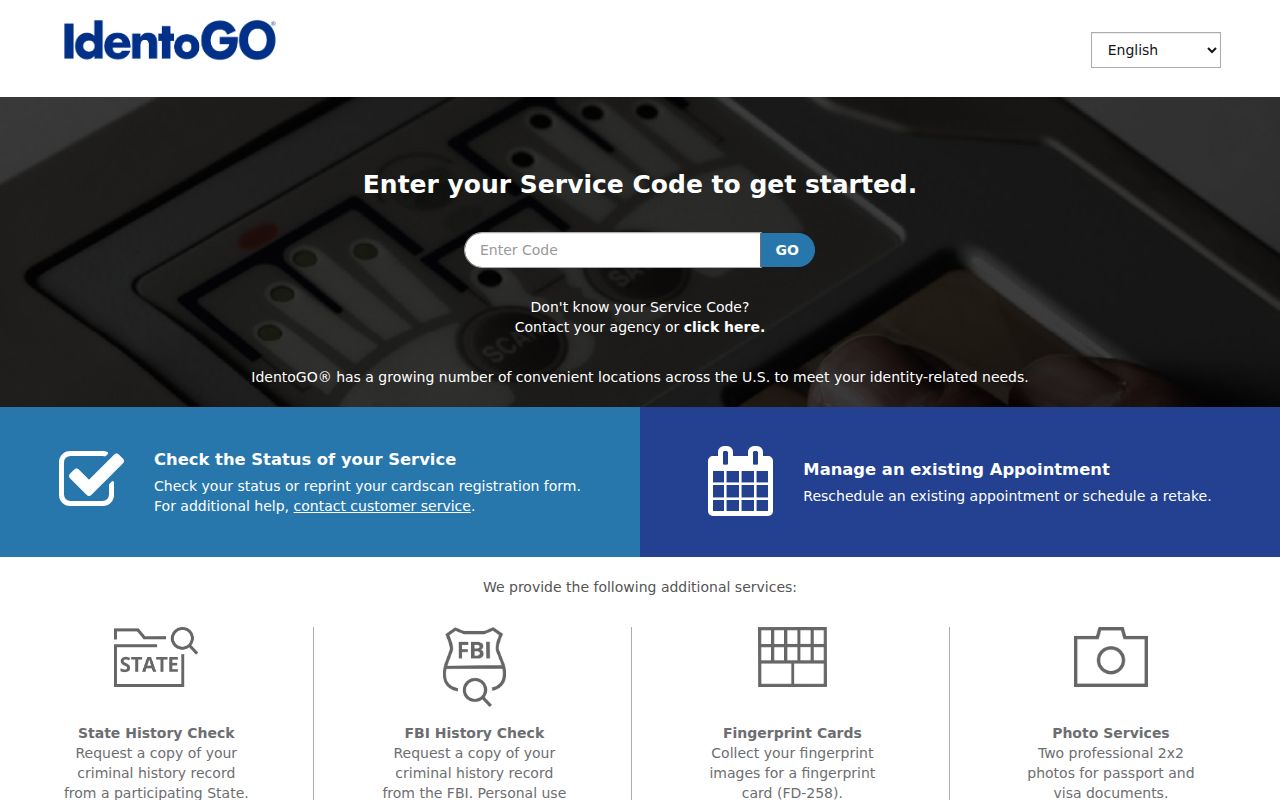
The live scheduler matters because no fixed Coke County capture site was verified. Coke County residents should search the current Robert Lee or Bronte area first, then check San Angelo availability if needed.